 Book an Appointment Lal Darwaza branch
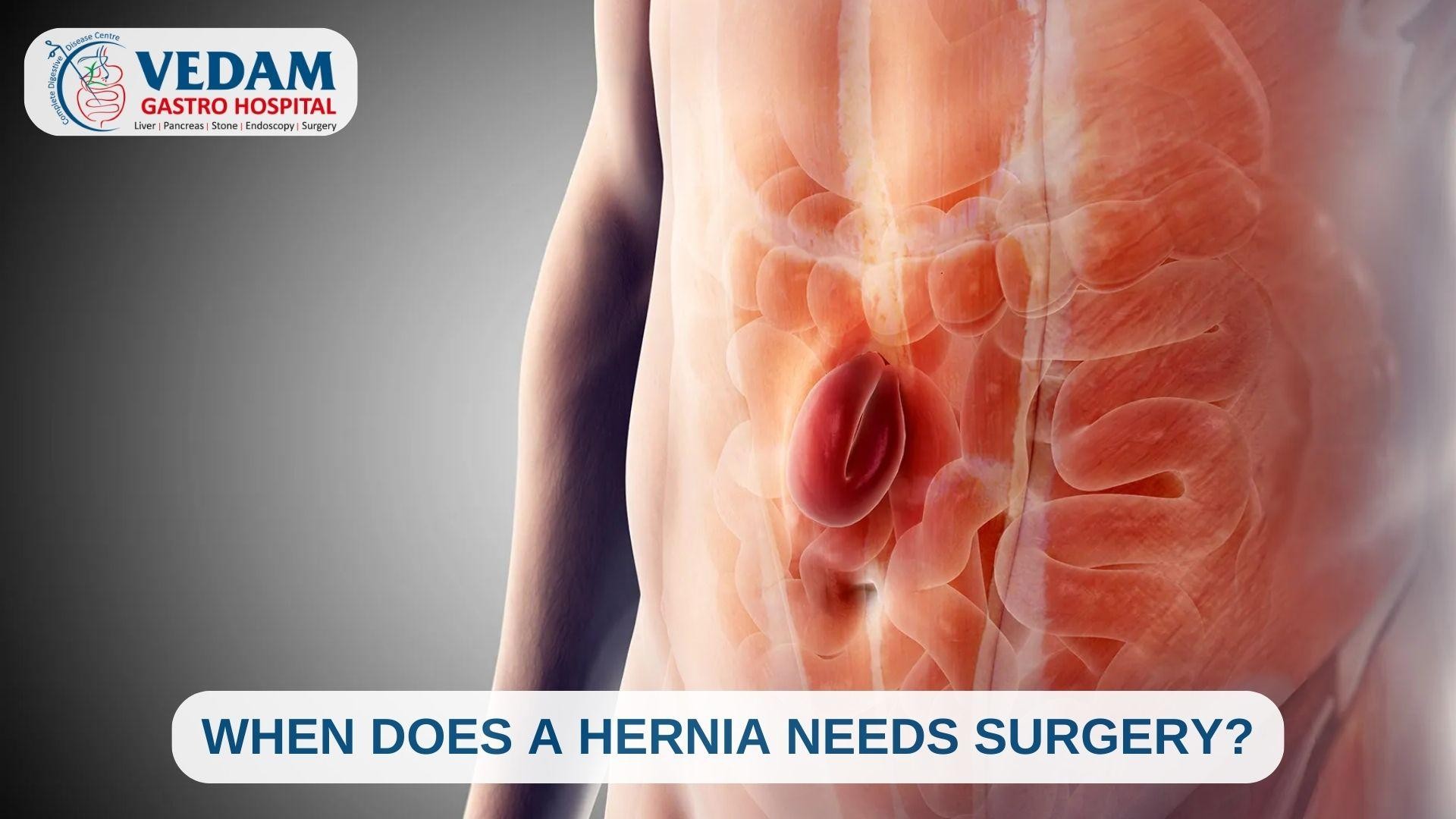
The word hernia doesn’t sound all that dramatic. But if you’ve ever had one or watched someone deal with it — you know it’s not just some minor “lump.” It can be nagging, painful, and in certain cases, downright dangerous. The tricky part is figuring out when you can manage it with watchful waiting and when it’s time to let a surgeon step in.
Let’s understand them from our specialists at Vedam Gastro Hospital, one of the best gastro hospitals in Surat.
The Usual Suspects: Types of Hernias
Not all hernias are created equal. Where they show up often hints at how bothersome they’ll be.
1. Inguinal hernia
This is the classic one people talk about. It pops up in the groin area, more common in men, especially if you’ve done years of heavy lifting or just have weaker abdominal walls. Sometimes it’s painless and just a small bulge, but other times it pulls and aches every time you bend, cough, or stand too long.
2. Umbilical hernia
Right around the belly button. Babies often get them, and in most cases, they close up as the child grows. But adults can develop them too, usually after pregnancy, weight gain, or straining. They look almost cartoonish, like the belly button is trying to push outward.
3. Hiatal hernia
This one’s sneakier. Instead of an obvious bulge, part of the stomach slips up into the chest cavity. People often confuse it with bad acid reflux or heartburn. You don’t see it but you can you feel it, usually after eating a heavy meal or lying down too quickly.
4. Incisional hernia
Ever had abdominal surgery? The scar area is weaker, and sometimes organs push through there. It’s like the body saying, “This is my exit point now.” These can grow larger over time and often need medical attention.
There are other rare types like femoral, epigastric, but the ones above make up the bulk of cases you’ll hear about.
Can You Just Live With a Hernia?
This is the million-dollar question. Technically, yes, you can live with some hernias for years if they’re small, not painful, and not growing. Our experts at Vedam Gastro Hospital, considered as some of the best stomach specialists in Surat, even recommend “watchful waiting” for certain cases. The body isn’t going to magically heal it, though. Once tissue pushes through a weak spot, it doesn’t just slide back into place forever.
So the real consideration is quality of life. If you can’t pick up your kid, laugh hard, or go for a jog without feeling like your insides are staging a protest, why live like that?
When Surgery Becomes the Smarter Choice
Surgery isn’t always the immediate answer. But there are clear situations where it’s not just an option — it’s necessary.
● Pain that keeps getting worse. If it’s tender, sore, or making everyday stuff miserable, surgery is worth considering.
● Size keeps increasing. A small lump that doubles in size over months isn’t going to shrink on its own.
● Symptoms of obstruction. Think nausea, vomiting, constipation, or bloating. That could mean part of your intestine is trapped.
● Strangulation risk. This is the scary one. If blood supply gets cut off, the tissue can die. Signs include sudden severe pain, redness, and a hernia that won’t push back in. That’s a medical emergency, not something you wait out.
Most modern hernia surgeries are pretty straightforward. Many are done laparoscopically at the best gastro hospitals in Surat, like Vedam Gastro Hospital. This means tiny incisions and faster recovery. You’re not laid up for months like the old days.
The Human Side of the Decision
Here’s the thing people don’t always talk about: deciding to get surgery isn’t just medical — it’s emotional and practical. Some people put it off because they’re scared of hospitals. Others because they can’t afford time off work. Totally understandable.
But ask yourself — what’s the cost of waiting? If you’re constantly adjusting how you sit, skipping workouts, or worrying that every twinge could be “the one,” that mental load is heavier than we admit.
Bottom Line
A hernia doesn’t automatically mean surgery tomorrow. But it does mean paying attention. If it’s small and symptom-free, your doctor may tell you to just monitor it. If it’s painful, growing, or causing digestive chaos — it’s time to talk about surgical repair.
Think of it this way: a hernia is your body’s way of waving a little red flag. Ignoring it doesn’t make it disappear; it just hands you a bigger problem later.
So don’t let fear or inconvenience call the shots. Get it checked from the best stomach hospital in Surat, weigh your options, and if surgery’s on the table, see it as a way to reclaim comfort — not just patch a hole.