 Book an Appointment Lal Darwaza branch
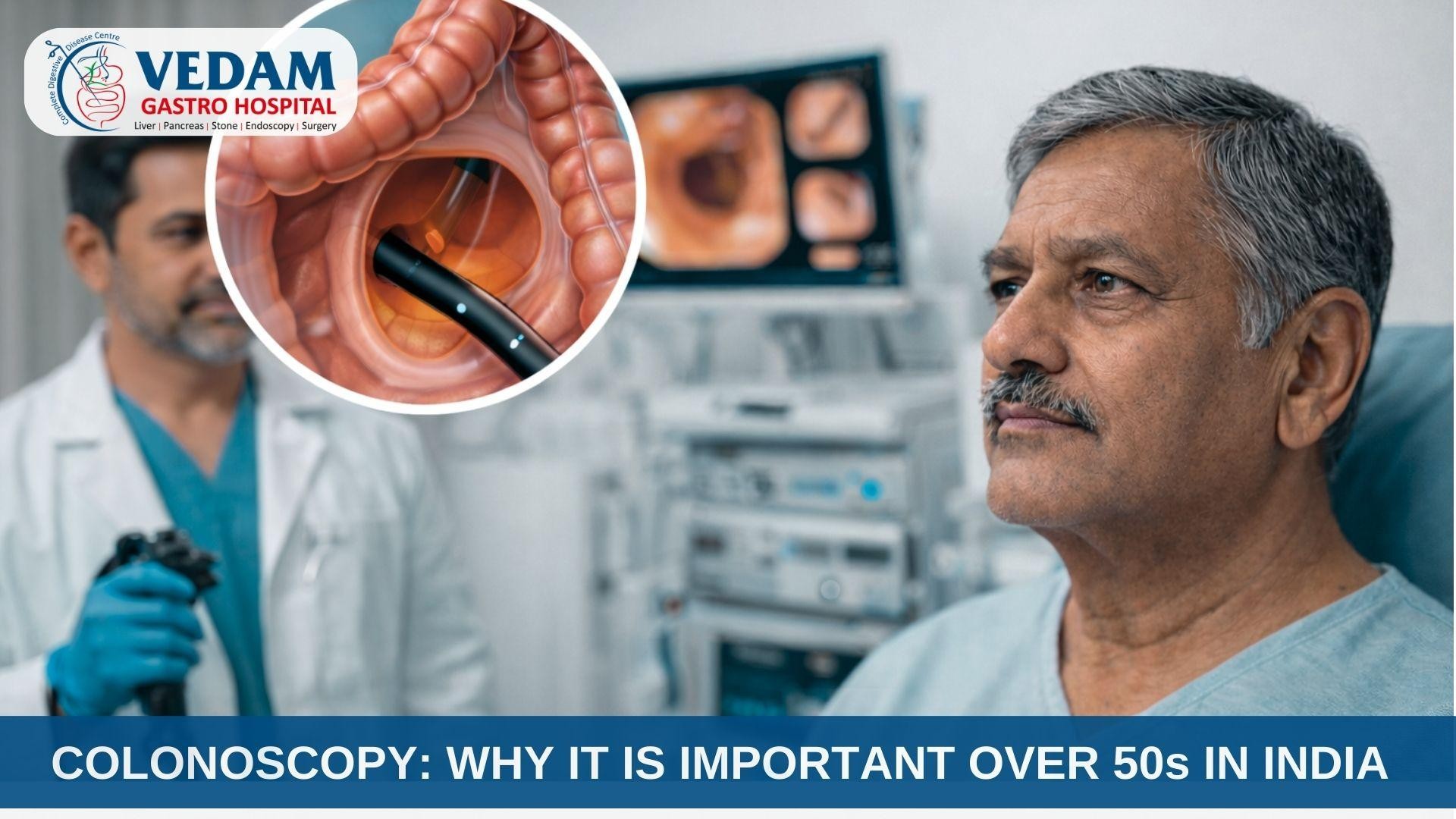
Most people don’t wake up one morning and think, “Great day for a colonoscopy.” It’s not exactly a bucket list experience. In fact, many people over 50s in India avoid the test because it sounds uncomfortable or they feel nothing’s wrong, so why bother. But here’s the thing. By the time something feels wrong in your colon, the problem has usually been building quietly for years. Let’s understand this from the experts at Vedam Gastro Hospital, one of the Best Colorectal Surgeon In Surat.
Why This Test Matters More After 50
Once you hit 50, things inside the body start behaving differently. You may notice slower digestion or the occasional bloating that refuses to leave. It’s easy to blame oily food or stress, and sometimes that’s true. But the risk of colorectal cancer begins climbing in this age group, and the tricky part is that early stages don’t shout for attention. They show up quietly, sometimes with nothing more than mild fatigue or a vague stomach ache that you dismiss while drinking your morning chai.
A colonoscopy helps doctors see what’s happening inside your colon in real time. If there are polyps, the doctor can remove them right then and there. According to the best gastro surgeons in Surat, this alone can prevent cancer from developing later. It’s one of the few screenings where the test itself can fix the early problem before it grows into something serious.
The Situation in India
India has been seeing a steady rise in colorectal cancer cases, especially in urban areas. Long work hours, low fiber diets, less activity and high stress levels all play their part. As per the experts at Vedam Gastro Hospital, considered as one of the best stomach hospitals in Surat, many people delay medical checkups unless symptoms hit hard. And let’s be honest, there’s still a cultural habit of trying home remedies first. A spoon of ajwain water, some hing, a bit of fasting, then hoping everything settles on its own.
These things can help sometimes, yes, but they can’t spot internal changes. They can’t tell you if something is growing in there that shouldn’t be. A colonoscopy can.
What a Colonoscopy Really Feels Like
Here’s the funny part. Most people fear the test more than the actual experience. The day before is the part everyone complains about. You drink a solution that clears your bowel. It’s not tasty, let’s be honest, and you’ll spend more time in the bathroom than you want to. But once you get to the hospital the next day, the process is smoother than expected. You’re given medication that helps you relax or sleep lightly. You don’t feel sharp pain or anything dramatic. Many people don’t remember the procedure at all.
Signs You Shouldn’t Ignore
Even if you’re under 50, there are moments when a colonoscopy becomes important. If you see blood in your stool, experience sudden weight loss without trying, or notice long term changes in your bowel habits, don’t wait. If your parents or grandparents had colorectal cancer, talk to your doctor sooner rather than later. Genetics can push the timeline earlier.
A little awareness goes a long way. One small test can give you clarity about what’s happening inside your digestive tract, something no amount of guessing or Google searching can provide.
The Real Value of Early Screening
Some people think, “If I feel fine, why get tested at all.” It’s a fair question. But most dangerous conditions don’t follow a timetable. They don’t wait for symptoms before starting trouble. The best colorectal surgeons in Surat prefer a colonoscopy because it works as an early warning system. It helps you catch problems at the stage when treatment is simple and recovery is quick.
Think of it the way you think about servicing your car. You don’t wait until the engine starts smoking to check what’s wrong. You do it as preventive care. Your colon deserves the same logic.
Final Thought
If you’re over 50 in India, consider this test a gift to your future self. It’s a few hours of discomfort for many years of peace of mind. And peace of mind is worth far more than the short awkwardness of a medical procedure. Take the step. Your body will thank you in quiet ways you’ll only appreciate later.