 Book an Appointment Lal Darwaza branch
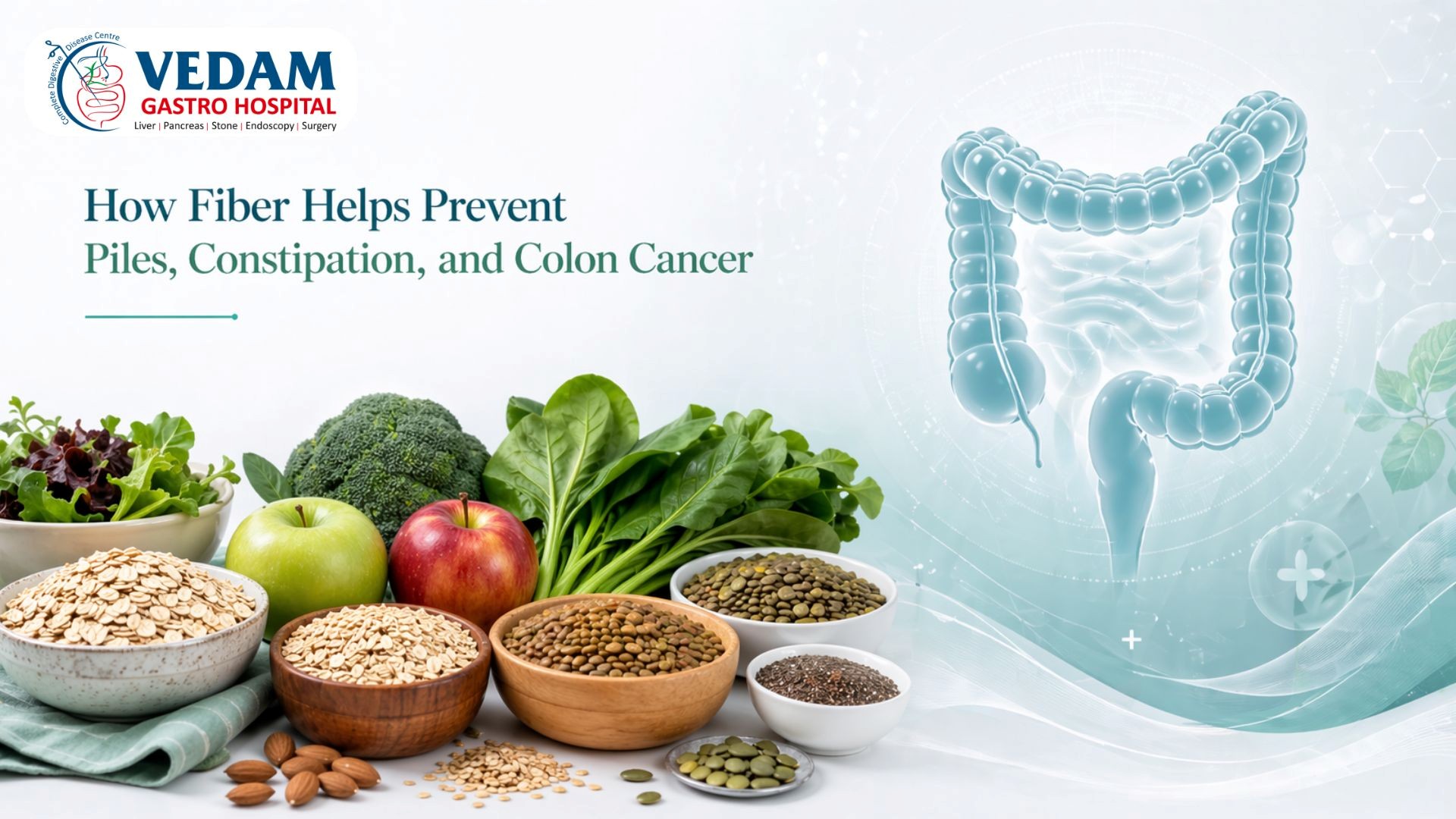
When it comes to digestive health, one simple thing can make a big difference: fibre. Many people know fibre is good for health, but not everyone understands why it matters so much. The truth is, fibre plays an important role in keeping your digestive system healthy and helping prevent common problems like piles and constipation. The best part is that adding fibre to your daily diet is both easy and natural. If you are struggling with piles or constipation, it is important to seek the right medical advice. For proper evaluation and treatment, consult an experienced colorectal surgeon in Surat at Vedam Gastro Hospital.
What is fiber?
Fiber is a type of carbohydrate found in plant based foods. It is different from other carbs. Your body cannot fully digest it. Instead of breaking down like sugar or starch the fiber passes through your digestive system mostly unchanged. And that’s exactly what makes it so beneficial according to our experts at Vedam Gastro Hospital, being the best stomach hospital in Surat.
There are two main types of fiber:
1. Soluble fiber
● Dissolves in water
● Forms a gel-like substance
● Helps slow digestion
2. Insoluble fiber
● Does not dissolve in water
● Adds bulk to stool
● Helps food move through your digestive system
How Fiber Prevents Constipation?
According to our expert gastrosurgeon in Surat at Vedam Gastro Hospital, constipation is one of the most common digestive problems. It happens when your stool becomes too hard and difficult to pass. Fiber adds bulk to your stool and softens the stool by absorbing water. When you eat enough fiber your digestive system works more smoothly. You don’t have to strain or struggle in the bathroom.
The Connection between Constipation and Piles
Piles are swollen veins in the rectum. They often develop due to straining during bowel movements. When you are constipated you push harder and pressure increases in the rectal area. With time this leads to piles.
How Fiber Helps Prevent Piles?
Fiber reduces the risk of piles by preventing constipation in the first place.
Here’s how:
● Makes stool soft and bulky
● Reduces the need to strain
● Keeps bowel movements smooth and regular
● Reduces pressure on rectal veins
A lot of doctors recommend increasing fiber intake as the first step in treating and preventing piles. If your bowel movements are easy and regular your chances of developing piles drop greatly.
Is there any relation between Fiber and Colon cancer prevention
Yes, there can be.
A fibre-rich diet is linked with a lower risk of colorectal cancer. Fibre helps keep bowel movements regular and supports colon health. It may reduce the time harmful waste stays in the intestine. It also supports a healthier gut environment. Whole grains, fruits, vegetables, beans, and seeds are good fibre sources.
But fibre alone is not enough, overall lifestyle and timely screening matter too. Small daily food choices can make a big difference over time, says our expert colorectal surgeon in Surat at Vedam Gastro Hospital
How much Fiber do you Actually Need in our Diet?
The recommended intake is around 25 to 30 grams per day. But most people consume far less than this. You should not increase fiber all at once. Add it slowly to avoid gas and bloating.
Best Fiber-Rich Foods to Include in Your Diet
Adding fiber doesn’t mean complicated diets. Simple everyday foods can help.
Fruits:
● Apples
● Bananas
● Oranges
● Papaya
Vegetables:
● Carrots
● Spinach
● Broccoli
● Beans
Whole grains:
● Oats
● Brown rice
● Whole wheat roti
● Quinoa
Legumes:
● Lentils (dal)
● Chickpeas
● Kidney beans
Nuts and seeds:
● Almonds
● Chia seeds
● Flaxseeds
Tips to increase Fiber without Discomfort
You can add a little more each day instead of changing your diet overnight. You need to know that fiber works best when it absorbs water. Without enough water it can actually worsen Constipation. Physical activity helps your digestive system move smoothly. Natural foods are always better as compared to fiber powders or pills. If you suddenly eat too much fiber you might feel bloated or gassy. That’s normal but it can be avoided.
Common Mistakes People Make
Even when trying to eat healthy, some habits can reduce the benefits of fiber.
Avoid these:
● Eating refined foods (white bread, processed snacks)
● Skipping fruits and vegetables
● Not drinking enough water
● Ignoring the urge to pass stool
When Should You Be Concerned?
While fiber helps in most cases, some symptoms should not be ignored.
Consult our specialist at Vedam Gastro Hospital, one of the best gastro hospital in Surat, if you have:
● Persistent constipation
● Blood in stool
● Severe abdominal pain
● Unexplained weight loss
● Long-term piles
So above all you need to know that fiber might seem like a small part of your diet but its impact on your health also is huge. From preventing constipation and piles to reducing the risk of colon cancer, fiber supports your digestive system in powerful ways. The best part is that improving your fiber intake doesn’t require expensive treatments or even complicated plans. Simple natural foods can help you stay healthy and feel better every day. You can start small, stay consistent and always listen to your body. Your gut will truly thank you.