 Book an Appointment Lal Darwaza branch
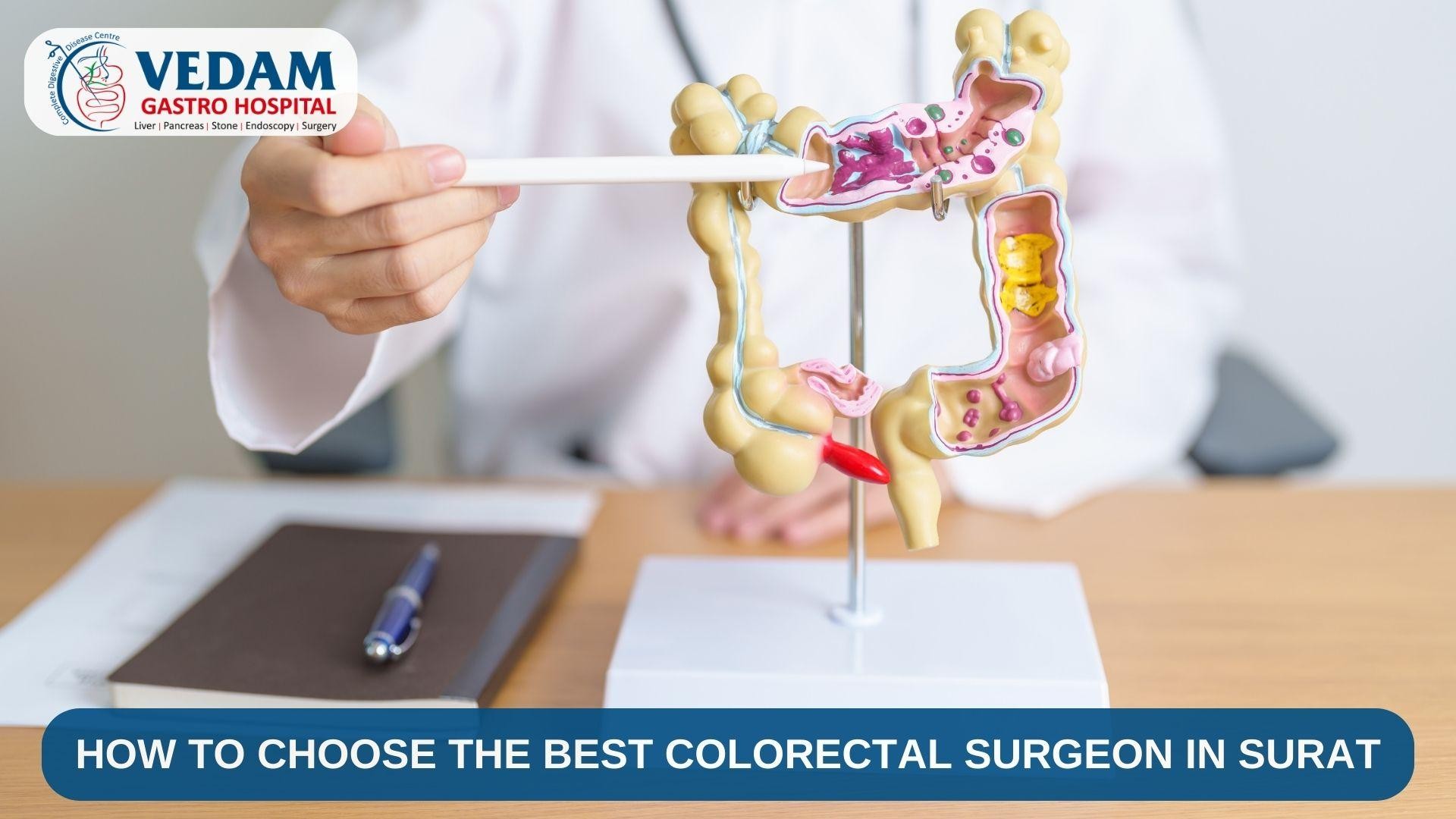
Have you ever felt awkward while looking for a colorectal specialist for those problems related to poop and all the shit down there? Many people avoid these bowel and stool related problems because they don’t want to talk about piles, fissures, constipation, bleeding, or pain during bowel movements. But these problems are far more common than most of us think, and the earlier you get help, the simpler the treatment usually is.
If you’re also searching for the Best Colorectal Surgeon in Surat, then let us tell you that you’re not alone. And the “right” surgeon isn’t only someone who operates. It’s someone who listens without judgement, has experience and expertise, gets the diagnosis right, explains your options in plain language, recommends the safest approach (not the quickest one), and supports you through recovery with clarity and care.
This guide from our specialist team at Vedam Gastro Hospital, Surat, breaks down what to look for, without complicated medical terms, so you can choose confidently and get relief sooner.
1) First, know what a colorectal surgeon actually treats
A colorectal surgeon in Surat specialises in problems of the colon (large intestine), rectum, and anus. That includes everything from common day-to-day issues to more serious conditions, such as:
● Piles (haemorrhoids)
● Anal fissure (a small tear that can cause sharp pain and bleeding)
● Anal fistula (a recurring infected tract)
● Pilonidal sinus (infection near the tailbone area)
● Abscess (a pocket of pus)
● Chronic constipation or bowel-control concerns
● Polyps and cancers of the colon/rectum
● Complications related to inflammatory bowel disease
Not every stomach complaint needs a colorectal specialist. But if your symptoms keep coming back, are painful, or are affecting your routine, it’s worth getting a specialist opinion.
2) Choose experience, not “big words”
What matters most is how often the surgeon handles your type condition. Simple questions you can ask in the consultation:
● “How many cases like mine do you typically see in a month?”
● “Do you usually manage this with medicines, procedures, or surgery?”
● “If surgery is required, which method do you commonly use, and why?”
A good surgeon won’t get defensive. TBeing the best gastro surgeon in Surat, he will answer clearly and patiently, because your questions are part of good care.
3) Prioritise correct diagnosis over quick surgery talk
Many colorectal symptoms overlap and lead to misdiagnosis. Like for example, bleeding may be due to piles, fissures, infection, polyps, or something that needs further evaluation. Pain could point to a fissure, abscess, fistula, muscle spasm or even due to chronic constipation.
A careful colorectal surgeon will focus on:
● Your detailed symptom history
● A respectful examination (with privacy and comfort)
● Tests only when truly needed
● A clear explanation of what’s going on and what it means
Be cautious if someone pushes for “surgery immediately” without a proper assessment. A reliable colorectal specialist will never rush you into a decision.
4) Ask about modern options, confirming why it suits you
Many colorectal conditions today can be treated with minimally invasive procedures, which often means:
● Less pain
● Faster recovery
● Smaller wounds
● Shorter hospital stay (sometimes same-day discharge)
Depending on the diagnosis, options may include laser procedures, stapling techniques, or keyhole surgery.
But “latest” doesn’t automatically mean “best.” In some cases, a more traditional method can be safer and more effective. The right surgeon will explain:
● Why they’re recommending a particular approach
● What alternatives exist
● What recovery will realistically look like
5) Comfort and privacy matter more than people admit
Let’s be honest, most people feel awkward talking about bowel issues. But let us tell you that it is completely normal. What shouldn’t be normal is feeling judged or exposed during your visit. And it’s ok.
Look for a setup that feels respectful:
● A clean, well-managed clinic or hospital
● Proper privacy during consultation and examination
● Staff who behave politely and professionally
● A doctor who speaks with sensitivity, not sarcasm
If the experience feels rushed or embarrassing, many patients delay treatment again. The right colorectal surgeon will make the first visit feel easier than you expected.
6) Ask about recovery before you agree to anything
Before you commit to a procedure, get clarity. Ask questions like:
● “How many days should I take off work?”
● “How much discomfort is expected, and how will it be managed?”
● “What food changes should I follow?”
● “What are the warning signs I should watch for?”
● “How many follow-ups will I need?”
7) See if they talk about prevention, not only treatment
Many colorectal problems can come back, especially piles and fissures, if daily habits don’t improve. A responsible surgeon will guide you on prevention, too, including:
● Increasing fibre in your diet
● Drinking enough water
● Avoiding straining and long toilet time
● Treating constipation early
● Staying active and managing weight
If the conversation is only about surgery, and nothing about preventing recurrence, treat that as a warning sign.
8) Don’t brush off red-flag symptoms
Some symptoms deserve faster attention. Don’t wait if you have:
● Bleeding that keeps repeating
● Unexplained weight loss
● Constipation or diarrhoea lasting weeks
● Ongoing abdominal pain
● Family history of colon cancer
● A constant feeling that the bowel doesn’t empty fully
In these cases, self-diagnosis can delay the real cause. A good specialist will evaluate properly and guide you calmly, without creating fear.
9) Trust how you feel after the consultation
Your gut feeling counts. After the visit, you should leave with:
● A clear idea of what’s going on
● A plan that actually makes sense
● No pressure to decide immediately
● The feeling that your privacy was handled properly
If you walk out confused, rushed, or uncomfortable, it’s completely fine to take a second opinion.
Choosing the best colorectal surgeon in Surat isn’t about glossy clinics or a popular name. It’s about finding someone who’s handled cases like yours many times, speaks in easy-to-understand language, recommends what’s safest (not what’s fastest), and treats you with respect from the first visit to recovery.
FAQs: How to Choose the Best Colorectal Surgeon in Surat
1) When should you consult a colorectal surgeon?
If you have bleeding that keeps coming back, pain during bowel movements, a lump or swelling, discharge, long-standing constipation, or symptoms that don’t settle with basic home care and medicines, it’s a good idea to consult a specialist.
See a specialist if you have repeated bleeding, pain during bowel movements, swelling or a lump, discharge, severe constipation, or symptoms that keep returning even after basic treatment.
2) Is bleeding always because of piles?
No. Bleeding can happen due to piles, fissures, infections, polyps, and other issues. That’s why proper diagnosis matters more than assumptions.
3) Will I definitely need surgery?
Not always. Many conditions improve with medicines, diet changes, lifestyle correction, or minor procedures. Surgery is suggested only when it’s genuinely required.
4) Are minimally invasive treatments always the best option?
They often come with benefits such as less pain, smaller wounds, and faster recovery. But they’re not a one-size-fits-all solution. The right surgeon will tell you what’s appropriate for your condition, what the trade-offs are, and why they’re choosing that approach.
5) How do I know I’m choosing the right surgeon?
You can usually tell in the first conversation. A good colorectal surgeon will:
● Speak comfortably about the problem, without making you feel embarrassed
● Take a proper history and examine yourself carefully
● Explain the diagnosis and next steps in simple language
● Give you time to think instead of pushing you
● Share a clear plan for recovery and follow-ups
6) What should I ask on the first visit?
Go in with a short checklist:
● What exactly is the diagnosis, and what does it mean for me?
● What are my treatment options: medical, procedural, and surgical?
● What recovery time should I plan for (including work and travel)?
● How will pain be managed?
● What risks should I know, and what warning signs should send me back?
● How many follow-ups will I need?
● What can I do to prevent it from coming back?
7) How can I stop piles or fissures from returning?
Small habits, done daily, matter the most: eat more fibre, drink enough water, don’t strain, move your body regularly, and deal with constipation early, before it becomes a pattern.
8) Why does aftercare matter so much?
Aftercare helps healing, reduces infection and pain, and lowers the chances of the issue returning. Treatment isn’t just the procedure; it’s the recovery support that follows.