 Book an Appointment Lal Darwaza branch
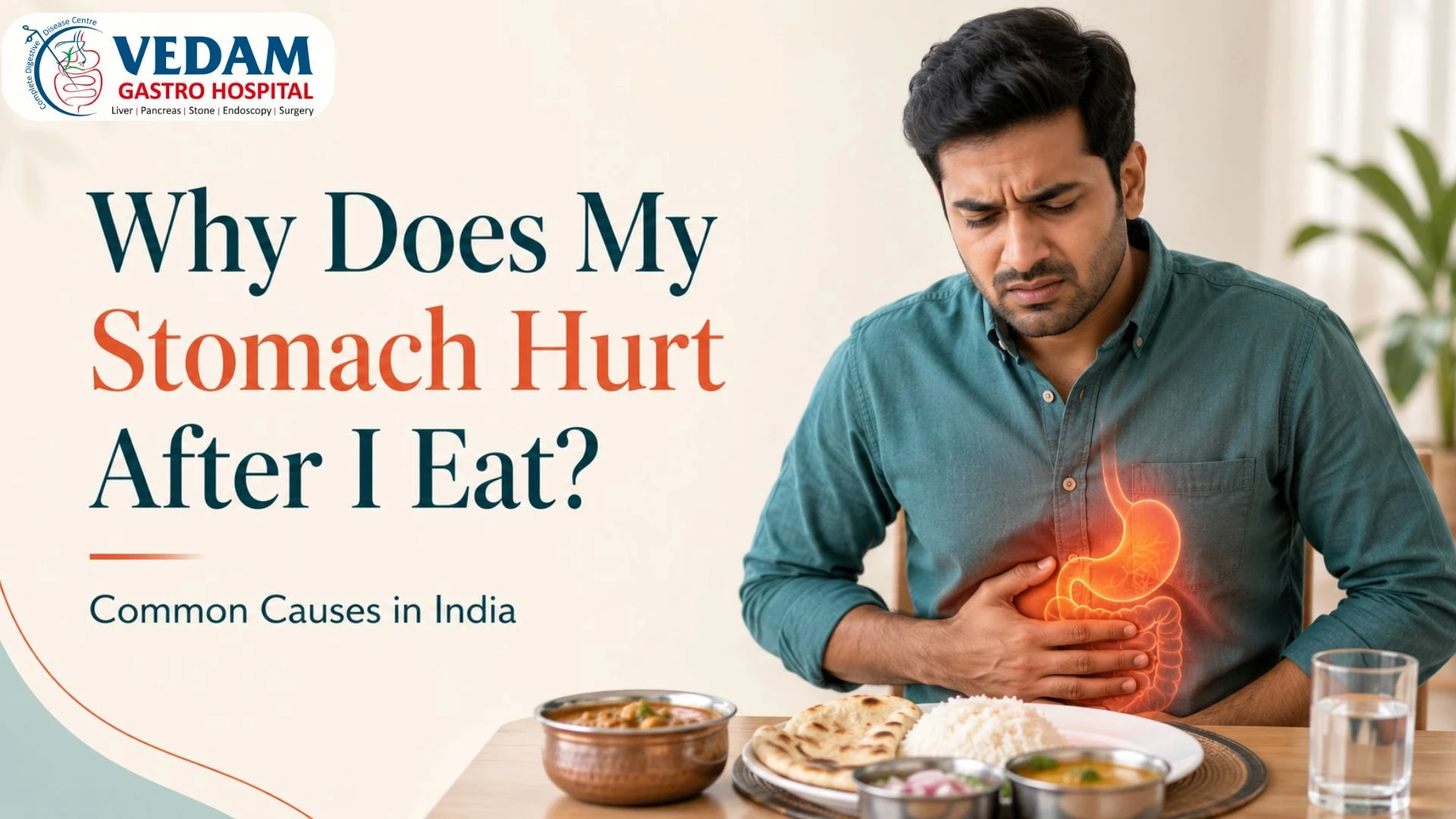
Stomach pain after eating is something that a lot of people experience normally. Sometimes it is just mild discomfort that goes away on its own, but if it keeps coming back, it can affect your appetite, daily routine and peace of mind. You might feel bloated after meals or burning heaviness. It can happen after spicy food or oily meats. The reason is not always obvious, which is why it helps to understand what could be causing it. The good news is that in many cases the cause is manageable. But if something doesn’t feel right or if the pain is too much, then it’s time for you to visit Vedam Gastro which provides experienced and trusted gastro care.
Is Stomach Pain After Eating Always Serious?
A stomach pain experienced after you eat a meal is not always serious because sometimesit happens because of some minor issues like:
- You ate too fast
- You overate
- You had very spicy or oily food
- You ate food that did not suit you
Common Causes of Stomach Pain After Eating
Acidity and acid reflux
One of the most common reasons for pain after eating is acidity according to our specialist Dr Pallav Parikh, one of the most expert Best Stomach Specialist in Surat. He mentions that stomach acid irritates your food pipe or stomach lining. Some common symptoms include burning in the chest, sour burps and stomach burning. Common triggers include spicy curries or fried snacks. Acidity often feels worse after lying down soon after eating.
Indigestion
Indigestion is another common reason. It can happen when your stomach struggles to break down food properly. Some common symptoms include fullness after small meals, bloating nausea or burping. This might happen after heavy meals or oily food.
Gas and bloating
Gas can cause short or cramp-like pain after meals. This might happen due to eating too fast, swallowing air or certain foods not suiting you. Symptoms generally include stomach tightness burping or feeling heavy. Usually this improves with time and diet changes.
Food intolerances
You might have trouble digesting certain foods. Some common examples include milk and dairy gluten sensitivity or very oily food. Symptoms might include pain after specific foods or bloating. If pain keeps happening after the same foods it is worth noticing the pattern.
Stomach infection or food poisoning
Outside food or poor hygiene can sometimes cause stomach infection. This is common during travel or after eating street food. Some common symptoms include pain, vomiting and fever weakness. This needs attention especially if dehydration happens.
Gallbladder problems
Pain after fatty meals can sometimes be linked to gallstones or bladder issues. Symptoms might include pain in the upper right abdomen or pain after oily food.
Ulcers
Stomach ulcers are sores in the stomach lining. It can cause burning after eating pain or empty stomach or just nausea. Ulcers need proper treatment and you should not ignore it.
Irritable bowel syndrome
Irritable bowel syndrome is a common issue and can cause stomach pain linked to digestion. Common symptoms include pain after meals bloating Constipation or relief after passing stool. Stress often makes irritable bowel syndrome worse.
Pancreas or liver related issues
Sometimes pain after eating might be linked to deeper digestive organs. If that’s the case you need to visit the best gastro hospital in Surat.
Symptoms to watch:
- Severe upper stomach pain
- Yellow eyes
- Vomiting
- Weight loss
This needs medical attention.
Everyday Habits That Can Trigger Pain
Sometimes simple habits quietly make digestion worse.
These include:
- Eating too fast
- Skipping meals
- Late-night eating
- Too much tea or coffee
- Poor sleep
- Stress
What You Can Do at Home for Mild Symptoms
If your pain is mild and occasional, these simple steps may help:
- Eat smaller meals
- Avoid overeating
- Reduce spicy and oily food
- Drink enough water
- Eat slowly
- Avoid lying down right after eating
- Walk lightly after meals
A food diary can also help identify triggers.
When You Should See a Doctor
Please do not ignore stomach pain if you have:
- Pain after almost every meal
- Severe cramps
- Vomiting
- Blood in stool
- Black stools
- Weight loss
- Fever
- Trouble swallowing
These symptoms need proper medical evaluation.
A doctor may suggest:
- Blood tests
- Ultrasound
- Endoscopy
- Stool tests
This helps find the real cause.
So you need to know stomach pain after eating is common but it should not become normal. Sometimes the cause is simple like overeating or acidity. Other times it might point to gastric acid food intolerance or gallbladder issues. You need to notice patterns, improve daily habits and not ignore symptoms that keep returning often. If your stomach hurts often after meals, getting checked early can save you from bigger digestive issues later on and help you feel more comfortable every day.
FAQ
1) What is the reason of having stomach pain after having food?
Factors like indigestion, acidity, overeating , eating too fast or sensitivity towards certain food can be the reason
2) What are the common food components that can cause stomach pain?
Spicy, fatty, acidic foods, dairy, caffeine, or very large meals may trigger discomfort in some people.
3) How to relieve stomach pain due to gas problem?
Eat slowly, chew properly, avoid having foods which cause bloating and eat light
4) How can I prevent stomach pain which occurs after having meals?
Avoid fried, spicy, too oily food, walk for 15 mins after having meals, get yourself evaluated if the pain keeps on troubling you again and again.
5) What kind of stomach pan I should not ignore?
Sudden, acute stomach pain along with vomiting, fever, blood in stools should be evaluated by stomach specialist immediately.