 Book an Appointment Lal Darwaza branch
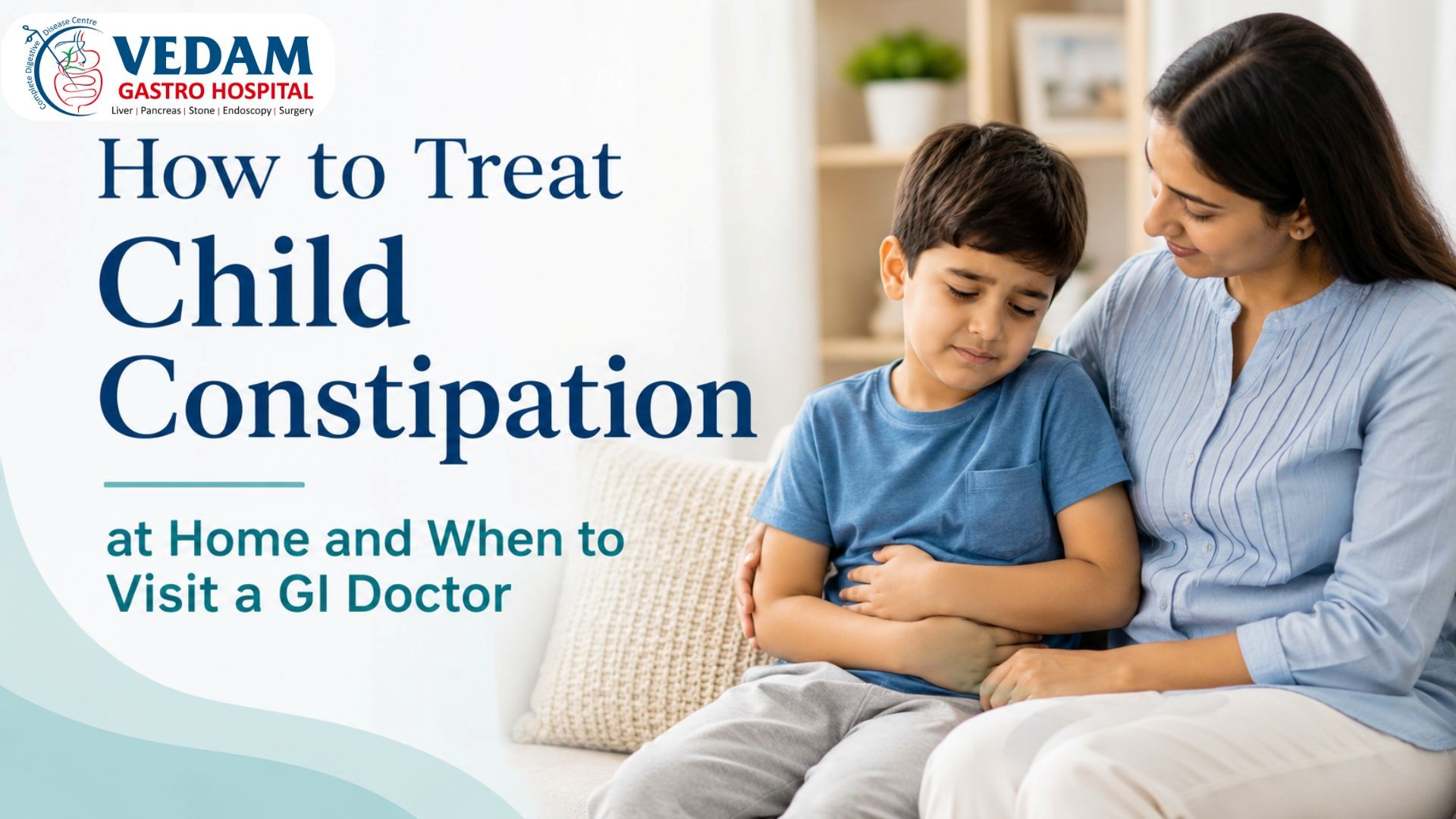
If you’ve ever dealt with a constipated child, you know it can turn an ordinary day upside down. The whining, the belly holding, the sudden refusal to use the toilet. Sometimes there are tears. Sometimes there’s fear. And sometimes you’re left wondering if this is just a phase or something that needs real medical help. Our experts from Vedam Gastro Hospital, one of the best gastro hospitals in Surat, warn about constipation in kids being incredibly common, but isn’t always easy to handle. The good news is that many cases improve with simple changes at home. The tricky part is knowing when home remedies are enough and when it’s time to call a specialist. Let’s understand this in detail.
Signs Your Child Is Constipated
It’s not only about how often they go. Some children poop daily and are still constipated because the stool is hard, dry, or painful to pass. Others may skip several days entirely.
You might notice your child straining, turning red, or crossing their legs to hold it in. Some kids hide behind furniture or in corners when they feel the urge. That “holding” behavior can make things worse, creating a cycle where stool becomes larger and harder over time.
According to our doctors at Vedam Gastro Hospital, one of the best stomach hospitals in Surat, complaints of tummy pain, loss of appetite, or even skid marks in underwear are also clues.
What Helps at Home
Before reaching for medications, the specialists suggest tweaking your basic lifestyle that can do the heavy lifting. Small changes, done consistently, can make a big difference.
Fluids matter more than you think.
Many kids simply don’t drink enough water. Offer water throughout the day, not just at meals. Warm liquids in the morning can sometimes stimulate bowel movement. Even a small cup of warm milk or water can get things moving.
Fiber helps, but go slow.
Fruits like pears, prunes, peaches, and apples with skin are classics for a reason. Oatmeal, whole grains, and vegetables also help bulk up stool. That said, dumping a mountain of fiber into a child who barely eats any can backfire and cause gas or discomfort. Ease into it.
Movement counts.
Active play stimulates the gut. Running around the park, jumping on a trampoline, even dancing in the living room all help the intestines do their job. Long stretches of sitting tend to slow things down.
Create a toilet routine.
Have your child sit on the toilet for five to ten minutes after meals, especially breakfast. This is when the body naturally wants to go. A footstool under their feet can help them push more effectively. Little details like this actually matter.
Stay calm about accidents.
Shaming or pressuring a child almost always makes constipation worse. Fear leads to more holding, and holding leads to harder stools. It becomes a loop. Gentle encouragement works better than lectures.
When Home Treatment Isn’t Enough
Sometimes you do everything right and nothing changes. Or things improve for a while, then slide backward. That’s when it’s time to look deeper.
If constipation lasts more than two weeks despite home measures, a pediatrician should evaluate your child. They may recommend stool softeners or other treatments that are safe for children. These are not habit forming when used properly, despite what many parents worry about.
You should also seek medical advice sooner if your child has severe pain, vomiting, a swollen abdomen, or blood in the stool. A small streak from a fissure can happen, but it still deserves a check.
When to See a GI Doctor
A pediatric gastroenterologist steps in when constipation is persistent, complicated, or affecting quality of life. Signs that warrant a specialist include:
● Frequent stool accidents after potty training
● Constipation that started very early in life
● Poor weight gain or feeding issues
● Severe withholding behavior
● Dependence on laxatives without improvement
A GI doctor, someone who is a stomach specialist in Surat, can rule out underlying conditions, adjust treatment plans, and guide long term management. Sometimes the problem is purely behavioral. Sometimes there’s a medical reason. Either way, having expert input can be a huge relief for exhausted parents.
The Emotional Side Matters Too
Constipation isn’t just physical. Kids can become anxious about using the toilet, especially if they’ve had a painful experience before. You might notice them clinging to diapers longer than expected or refusing unfamiliar bathrooms. Public toilets, with their loud flushes and cold seats, can feel scary to a small child.
Patience goes a long way here. Celebrate small wins. A calm trip to the toilet without tears is progress, even if nothing happens.
Trust Your Instincts
Parents usually know when something isn’t right. If your child seems uncomfortable, withdrawn, or just not themselves, it’s okay to ask for help. You’re not overreacting. Constipation can be surprisingly disruptive to sleep, mood, and appetite.
Most cases do improve, often with a mix of diet, routine, and time. But when they don’t, medical care can make a world of difference.
And honestly, once your child is back to comfortable, easy bathroom trips, the whole household feels lighter. It’s one of those problems you don’t realize is huge until it’s gone.